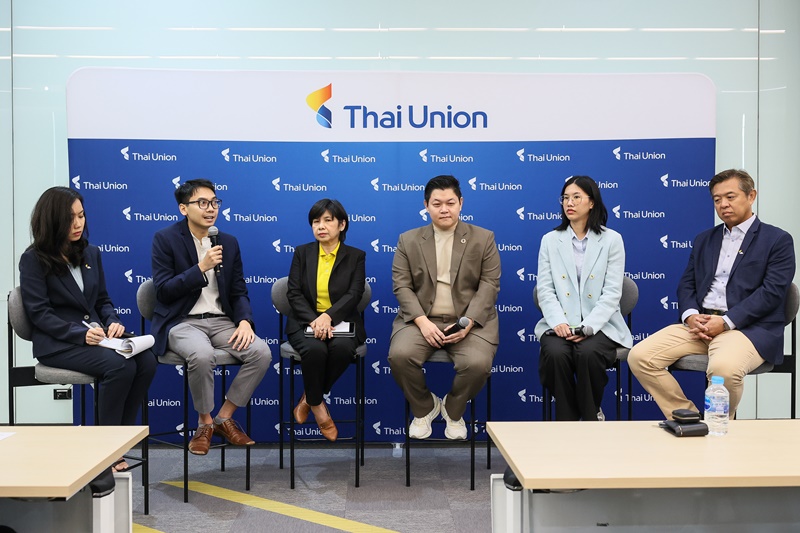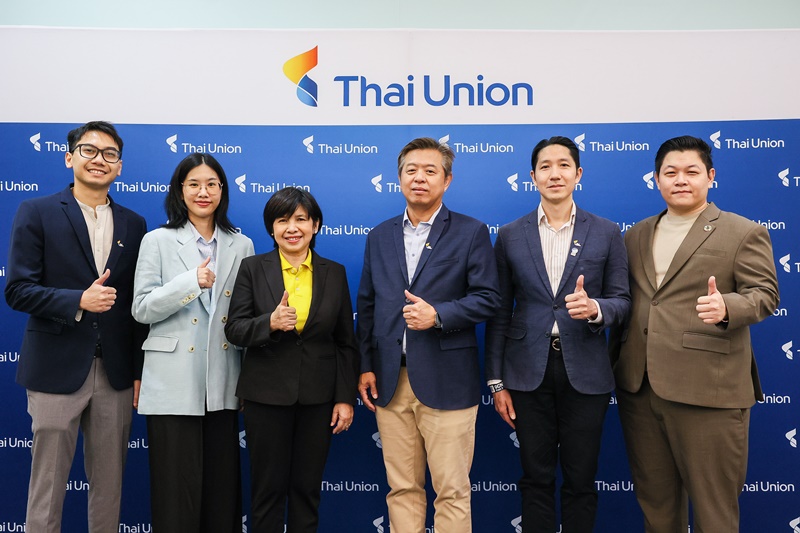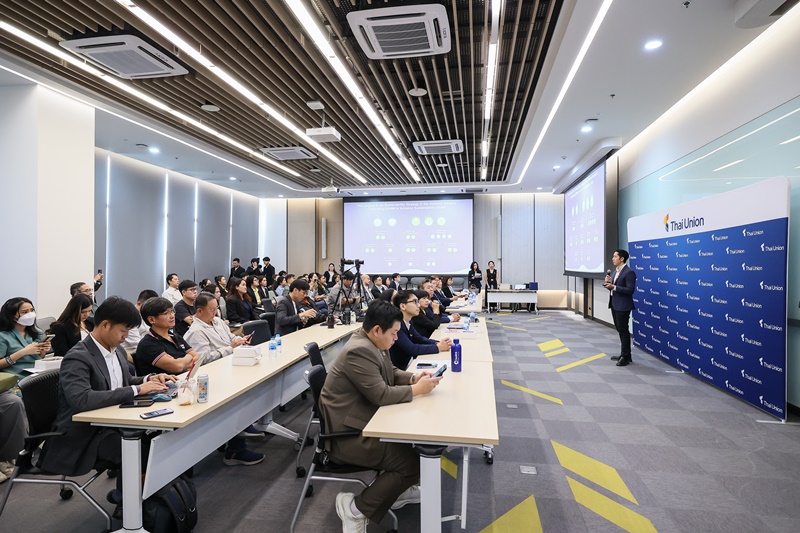
Thai Union Group PCL, one of the world’s leading seafood producers, is scaling its shrimp decarbonization initiative by bringing together public and private actors in sustainable aquaculture and blue finance. At the UN Global Compact Thailand Expo 2025, Thai Union called for greater collaboration, innovation, and investment in a high-level dialogue with voices from government, finance, and farming to explore how blue finance – financial mechanisms that support ocean-based sustainability – can unlock progress toward lower-emission shrimp farming and a net zero future.
The event, “Blue Financing and Aquaculture: Empowering the Sustainability Transition,” brought together experts from government, financial institutions, and farming communities to discuss how the seafood industry can mobilize capital, expertise, and innovation to help shrimp farmers lower their environmental impact while securing long-term growth.
A centerpiece of the discussion was Thai Union’s pioneering initiative to decarbonize shrimp production. Looking ahead, the company sees the potential for most shrimp farms across Thailand to adopt low-carbon practices, which would meaningfully support progress toward its broader goal of achieving net zero by 2050.
“As a global leader in the seafood industry, Thai Union is committed to driving sustainability across the sector through a range of initiatives. One of our key priorities is reducing greenhouse gas emissions in Thailand’s aquaculture industry,” said Yongyut Setthawiwat, Managing Director, Group Treasurer, Thai Union Group. “We believe that Blue Finance – financial investments that support sustainable activities related to the ocean and aquatic ecosystems – will be a key enabler in unlocking the resources needed across all sectors to accelerate the adoption of knowledge, innovation, and technology to promote sustainability throughout the industry’s supply chain and support the growth of the Blue Economy.”
Thai Union’s early efforts are already showing results: shrimp from the company’s decarbonization program are now available in stores through major retailers in the U.S. under the trusted Chicken of the Sea brand. Developed in collaboration with The Nature Conservancy, Ahold Delhaize USA, and Whole Foods Market, the initiative helps participating farms adopt practical, science-based solutions, such as transitioning to renewable energy, improving energy efficiency, and deploying innovative technologies that enhance farm performance while reducing environmental impact. The shrimp are fully traceable from hatchery to point of shipment, offering consumers greater confidence in the sustainability of their seafood choices.
The panel featured speakers from the Asian Development Bank (ADB), the Thai Department of Fisheries, and a local shrimp farmer involved in the program. Together, they explored the opportunities and roadblocks to expanding access to blue finance and sustainable farming practices in Thailand and beyond.
“Blue finance has the potential to transform how we support ocean-based industries,” said Fonthip Yuthaseree, Sustainable Finance Expert (Consultant), Asian Development Bank (ADB). “By aligning financial flows with environmental and social outcomes in line with global standards, we can empower farmers to make improvements in ways that benefit not only themselves, but also businesses, society, the environment, and biodiversity.”
Mantakanthi Tamtin, Director of the Coastal Aquaculture Research and Development Division, Department of Fisheries, said that “Thailand is committed to advancing sustainable aquaculture through collaboration with the private sector and financial institutions. Initiatives that align with national policies, such as efforts to reduce emissions and improve farm efficiency, can play a key role in supporting both environmental stewardship and economic resilience in the aquaculture sector.”
For shrimp farmer Ponchart Luangnarumitchai of Anan Farm, who has participated in the program for the past year, the impact is already tangible: “Before joining, it was difficult to access the knowledge, technology, and financing needed to reduce emissions from my farm. But over the past year, I’ve gained valuable insights and practical experience in applying new technologies. Installing solar panels has significantly lowered our energy costs, and using high-quality, sustainable shrimp feed means we use less feed and maintain better water quality. Thanks to these improvements, our shrimp can now reach more markets that demand sustainability. It gives me hope that we can farm in a way that protects the environment and supports our families.”
The event underscored that while the road to net zero is complex, Thai Union, as an industry leader, is showing how collaboration across sectors, backed by financial innovation and practical solutions, can deliver real impact.
“We’re not just talking about change, we’re building the ecosystem to make it happen,” Setthawiwat added. “This is Thailand’s opportunity to lead. But to succeed, we need everyone at the table: farmers, banks, regulators, scientists. That’s how we’ll scale to this initiative to hundreds of farms and create a model the world can follow.”
###